 how-to
How to Prevent Spiders in Florida Homes: 7-Step Guide
Table of Contents
- Why Spiders Target Florida Homes
- Common House Spiders in Florida: Identify Before You Act
- Step 1: Seal Cracks, Gaps, and Entry Points
- Step 2: Repair Screens, Doors, and Vents
- How to Keep Spiders Out of Your House by Cutting Their Food Supply
- How to Reduce Outdoor Spiders Around Your Home
- Natural Spider Repellents: What Works and What Doesn't
- Your Seasonal Prevention Calendar and Room-by-Room Checklist
- Frequently Asked Questions
Last Updated: October 21, 2026
Why Spiders Target Florida Homes
Spiders come inside for three reasons: food, water, and shelter from the heat. Florida's warm, humid climate keeps insects active almost year-round, which means spiders rarely run out of prey.
At NS Pest Solutions, we see the same pattern in home after home. A house that lets in ants and roaches will almost always have spiders too. The spiders are not the root problem.
Food, Shelter, and Easy Access
Most homes offer all three without trying:
- Food sources: ants, roaches, silverfish, and flies drawn to crumbs and moisture
- Shelter: attics, wall voids, garages, and closets that stay dark and humid
- Easy access: gaps under doors, torn screens, and cracks in the foundation
Remove the food and block the access, and the spider population drops on its own.
Common House Spiders in Florida: Identify Before You Act
The most common house spiders in Florida are mostly harmless. The southern house spider, wolf spider, and cellar spider rarely bite, and none are dangerous. Two you should respect: the black widow and the brown recluse.
Which Ones Are Harmless and Which Need a Call
Here is how to tell them apart:
- Southern house spider: brown, large, flat webs in corners. Harmless.
- Wolf spider: fast, hairy, ground level. Harmless but startling.
- Cellar spider: long thin legs, hanging webs. Harmless.
If you find a black widow or brown recluse, do not spray and hope. Call a pest professional for identification and treatment.
Step 1: Seal Cracks, Gaps, and Entry Points
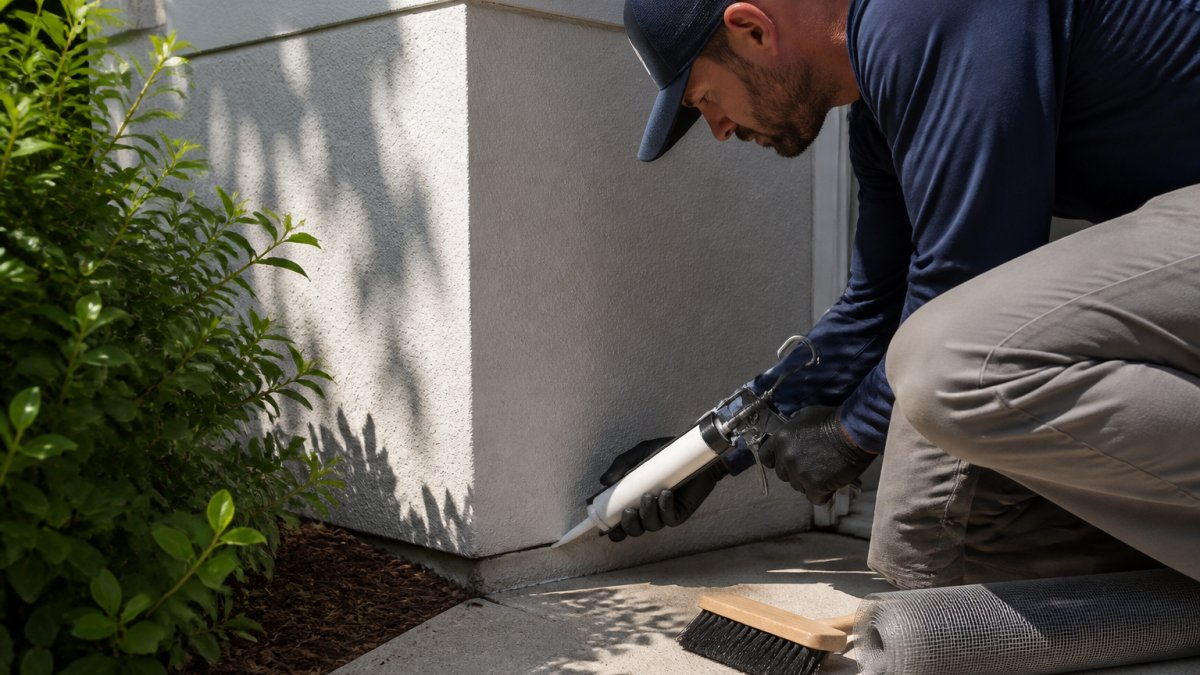
Sealing cracks and gaps is the single most effective step to prevent spiders from getting inside. Walk your home's exterior and seal every opening wider than a pencil.
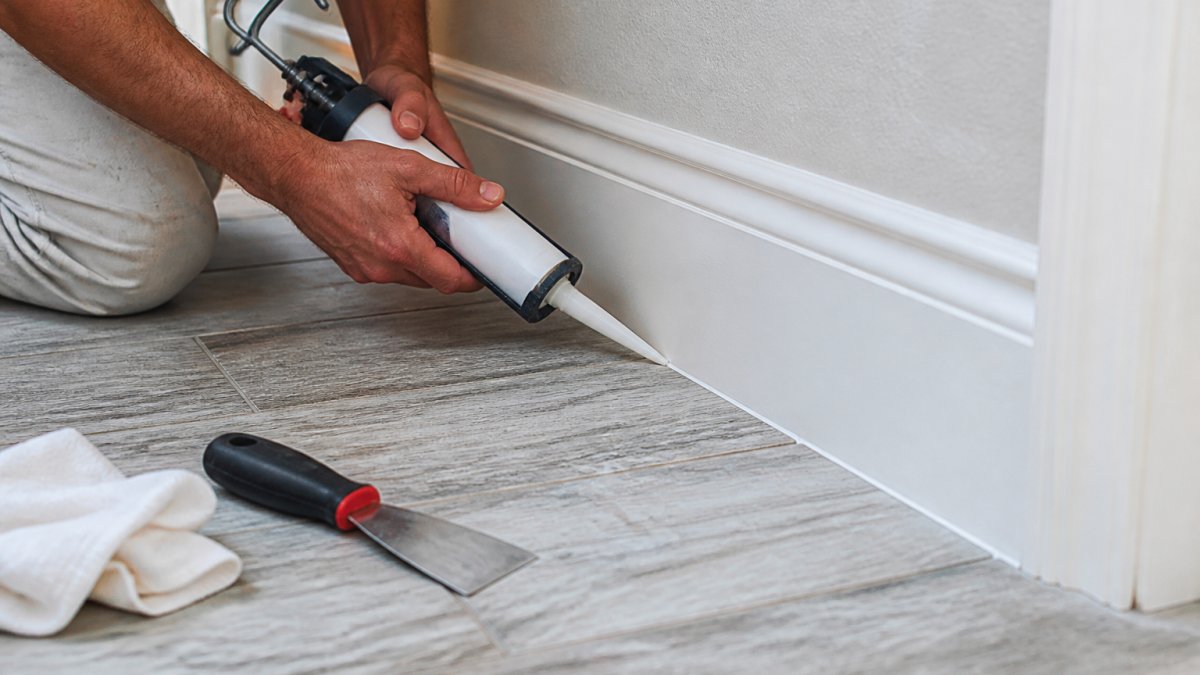
Focus on these spots:
- Foundation cracks and the sill plate where the house meets the slab
- Gaps around pipes and utility lines entering the walls
- Spaces under doors, especially garage and patio doors
Use silicone caulk for small gaps and expanding foam for larger openings. Check the work every few months, since Florida's sun and humidity break down sealant fast.
Step 2: Repair Screens, Doors, and Vents
Torn screens and loose door sweeps are open invitations. Repair window screens with patch kits, and replace damaged mesh rather than taping over it.
Then check:
- Door sweeps: replace worn ones so no gap shows daylight
- Weatherstripping: reseal door frames and window sills
- Vents: cover attic and crawlspace vents with fine mesh screen
A common mistake is sealing one side of the house and forgetting the other. Spiders find the weak spot you missed.
How to Keep Spiders Out of Your House by Cutting Their Food Supply
You can't keep spiders out of your house for long if their prey stays put. Reducing insects is the most overlooked step in spider prevention.
Start with these habits:
- Vacuum corners, baseboards, and under furniture weekly
- Wipe up crumbs and store food in sealed containers
- Fix leaky faucets and pipes that draw roaches and silverfish
Fewer insects means fewer spiders. It really is that simple.
How to Reduce Outdoor Spiders Around Your Home
Outdoor spiders move inside when the yard stops feeding them. Keep the perimeter clean and dry to cut the population before it reaches your walls.
Landscaping, Lighting, and Yard Debris
Work through this list each season:
- Trim vegetation so it doesn't touch the walls or roofline
- Keep mulch and leaf litter away from the foundation
- Clear yard debris, old woodpiles, and stored trash bags
Spiders build where prey gathers. Bright white lights pull in moths and bugs, and the spiders follow.
Natural Spider Repellents: What Works and What Doesn't
Most store-bought and homemade spider repellents fall into two buckets: scent-based deterrents and contact treatments. Neither replaces exclusion and insect control, but they are not equal, and the difference matters most in homes with children and pets.
How to Judge a Spider Remedy
Before you buy or mix anything, ask three questions:
- Does it block entry or just smell strong? Only physical barriers, caulk, mesh, door sweeps, actually keep spiders out. Scent products may discourage a spider from settling in a spot, but they do not stop it from walking through an open gap.
- How long does it last in humidity? Essential-oil sprays break down quickly in warm, damp air. Expect days, not weeks, and plan to reapply.
- Is it safe around kids, pets, and food surfaces? Read the label. Products marketed as "natural" are not automatically safe to spray on counters, pet bedding, or floors where a child crawls.
Scent-Based Remedies: What to Expect
These are the options homeowners ask about most. Treat them as supplements, not solutions.
- Peppermint oil: the most commonly cited deterrent. The strong menthol scent may discourage spiders from lingering, but the effect fades fast. Dilute per the label, spot-test on surfaces, and keep it away from pets, concentrated peppermint oil can irritate animals.
- Tea tree oil: similar short-lived effect. Never apply undiluted, and do not use around cats, which are sensitive to many essential oils.
- White vinegar: useful for wiping down surfaces and loosening webs, but weak as a repellent. Good for cleaning, not for prevention.
A common pattern: a homeowner sprays peppermint along baseboards, sees fewer spiders for a few days, then sees them return. That is the product fading, not the spiders leaving.
Contact and Residual Products
Some products are designed to kill spiders on contact or leave a residual on surfaces they cross. These can help in garages, basements, and along exterior foundations, but they carry more risk:
- Follow the label exactly, dilution, application sites, and re-entry times are not suggestions.
- Keep children and pets out of treated areas until dry, and store products locked away.
- Do not spray residual products on food-contact surfaces, pet dishes, or bedding.
The Bottom Line on Repellents
If you want the highest-impact, lowest-risk steps, spend your effort on sealing gaps, repairing screens, and cutting the insect population. Use scent-based remedies as a short-term supplement in low-traffic spots, and use contact products only where the label allows and the household situation is safe. For homes with crawling children, cats, or dogs, exclusion and cleaning do more with less risk than any spray.
Your Seasonal Prevention Calendar and Room-by-Room Checklist
Prevention works best on a schedule, and in a warm, humid climate the schedule shifts with the weather. Spider pressure follows insect activity, and insect activity follows moisture and temperature. Use the calendar below to decide what to prioritize each season, then run the room-by-room checklist to find the spots that matter most.
Seasonal Prevention Calendar
| Season | What Drives Spider Pressure | Priority Tasks |
|---|---|---|
| Spring | Warming temperatures wake insects; rain pushes them indoors | Re-check caulk and weatherstripping after winter; repair screens; clear leaf litter and debris from the foundation; inspect door sweeps |
| Summer | Peak insect activity; afternoon storms and high humidity | Vacuum weekly; fix leaks and drips; manage trash and recycling; trim vegetation away from walls; sweep webs from eaves and porch corners |
| Fall | Insects seek shelter as nights cool; yard debris builds up | Clear gutters and rooflines; remove woodpiles and stored clutter near the house; seal gaps around pipes and utility lines; screen attic and crawlspace vents |
| Winter | Indoor sheltering; holiday storage and boxes | Inspect closets, garage, and attic; vacuum corners and behind furniture; check stored boxes for webs and egg sacs; re-seal any gaps found during the year |
A practical rule: do the exterior sealing work in spring and fall, when you can comfortably spend time outside, and do the interior cleaning and inspection in summer and winter, when spiders are most likely to be active indoors.
Room-by-Room Inspection Checklist
Walk through each area with a flashlight and a notepad. Mark anything that needs sealing, screening, or cleaning, and schedule the fix rather than letting it slide.
- Kitchen: seal cracks along counters and baseboards; fix dripping faucets; store food in sealed containers; check behind the refrigerator and stove for webs
- Bathrooms: look under sinks for gaps around pipes and moisture; check exhaust fans and vents; caulk any separation at the tub or shower surround
- Garage: seal the base of the garage door; clear cardboard, boxes, and stored clutter; check corners and the ceiling for webs; screen any vents
Measuring Whether Prevention Is Working
You cannot manage what you do not track. Keep a simple log, a notes app or a sheet on the refrigerator works, and record:
- Sightings: date, room, and a quick description (or photo) of each spider you see
- Webs: where new webs appear and how often you remove them
- Insect activity: ants, roaches, or flies in the same areas, since spiders follow their prey
Review the log monthly. If sightings and webs are trending down, your exclusion and cleaning are working. If they hold steady or climb, especially if you find a black widow or brown recluse, or webs reappear within days of cleaning, that is the signal to escalate to a professional inspection rather than repeat the same steps harder.
For recurring problems, an every-other-month treatment plan keeps pressure on spiders and their food sources year-round. Our team uses family and pet friendly treatments, and we're happy to walk you through exactly what we apply and why.
Frequently Asked Questions
How do I get spiders to stay away from my house?
Start with exclusion, not sprays. Walk the outside of your home and seal cracks in the foundation, gaps around pipes and utility lines, and spaces under doors. Repair torn window screens and add door sweeps. Then remove the things spiders hunt: clear webs with a vacuum or broom, wipe down window sills, and keep insects in check. Reducing exterior lighting at night and trimming plants back from the walls removes the shelter spiders use to get close. Most homeowners see fewer spiders within a few weeks of consistent sealing and cleaning.
Do dryer sheets keep spiders away?
There is no reliable evidence that dryer sheets repel spiders. The idea circulates because the sheets carry a strong scent, and some people report fewer spiders in treated drawers or corners. If you want to test it, place a sheet in a closet or storage box and check after a week. For real prevention, focus on sealing entry points and removing webs. Scent-based methods, including natural spider repellents like peppermint oil, work best as a small addition to exclusion, not as a replacement for it.
Why should you never squish a spider?
Squishing is messy and often unnecessary. Most common house spiders in Florida are harmless and eat insects, including mosquitoes and roaches. Crushing one can stain walls and fabrics, and it does nothing about the entry points or food sources that brought it inside. A better approach is to catch and release or vacuum it up, then check the area for gaps and webs. If you keep finding the same species in the same spot, that is a sign to inspect nearby cracks and window frames.
When should I call a pest control professional about spiders?
Call a professional when you find spiders repeatedly in the same areas, when webs return within days of cleaning, or when you cannot identify what you are seeing. A pro can inspect entry points you may have missed, treat the exterior perimeter, and confirm whether the species needs special handling. NS Pest Solutions offers eco-friendly, family- and pet-friendly treatments with every-other-month plans. Pricing depends on factors like your home's size and layout, so we recommend requesting a quote for current rates.
Spiders keep coming back when the entry points and food sources stay open. If you'd rather hand the job to a team that treats the cause, not just the webs, NS Pest Solutions can help. Our eco-friendly, every-other-month plans cover targeted interior and exterior treatments, and our family-owned team is glad to answer your questions first. Get started with NS Pest Solutions and keep your home pest-free.