 blog
3 Ways to Keep Wasps Away From Your Porch
Last Updated: November 10, 2026
Quick Summary
The best ways to keep wasps away from a porch are to cut off food and water, stop nests from forming, and use plants, oils, and traps as support. Preventing access beats repelling, and repelling beats trapping. Remove crumbs, cover sweet drinks, seal gaps a pencil could fit through, and inspect eaves weekly.
- Wipe down tables, chairs, and railings after every meal to remove food cues.
- A gap the width of a pencil is enough for a queen wasp to enter.
- Inspect the porch once a week during wasp season, checking eaves and railings.
- Hang traps away from seating areas and never rely on a trap as your only step.
- Never spray a large nest during the day; wait for dusk or early morning.
Table of Contents
- Why Wasps Target Porches and What Actually Works
- Method 1: Remove Food and Water Sources That Attract Wasps
- Method 2: How to Keep Wasps Away From Building Nests
- Method 3: What Can I Put on My Porch to Keep Wasps Away?
- How to Keep Wasps Away Naturally: Evidence and Limitations
- Safety First: Handling Nests, Stings, and Persistent Wasps
- Your Seasonal Prevention Schedule for a Wasp-Free Porch
- When to Call NS Pest Solutions for Porch Wasp Control
- Frequently Asked Questions
Why Wasps Target Porches and What Actually Works
Wasps come to porches for three reasons: food, water, and shelter. Remove those three things and you remove the invitation. That is the whole strategy, and it works far better than any spray, scent, or gadget sold as a shortcut.
A homeowner may have tried peppermint oil, a decoy nest, and a bag trap. The wasps are still there. Not because those products do nothing, but because the nest is still under the eave.
Here is the honest ranking. Preventing access beats repelling, and repelling beats trapping.
- Method 1: Cut off food and water. Highest impact, lowest cost.
- Method 2: Stop nests from forming. Best long-term result.
- Method 3: Plants, oils, and traps. Useful support, limited on their own.
Below, we break down each method in the order we would actually do them.
Method 1: Remove Food and Water Sources That Attract Wasps
Start with the table, not the nest. Wasps are scavengers in late summer, and a single sticky glass can keep a patrol route active for days. The University of Florida IFAS extension guidance on stinging insects makes the same point: food removal is the foundation of any wasp control plan.
Clean Porch Surfaces and Outdoor Dining Areas
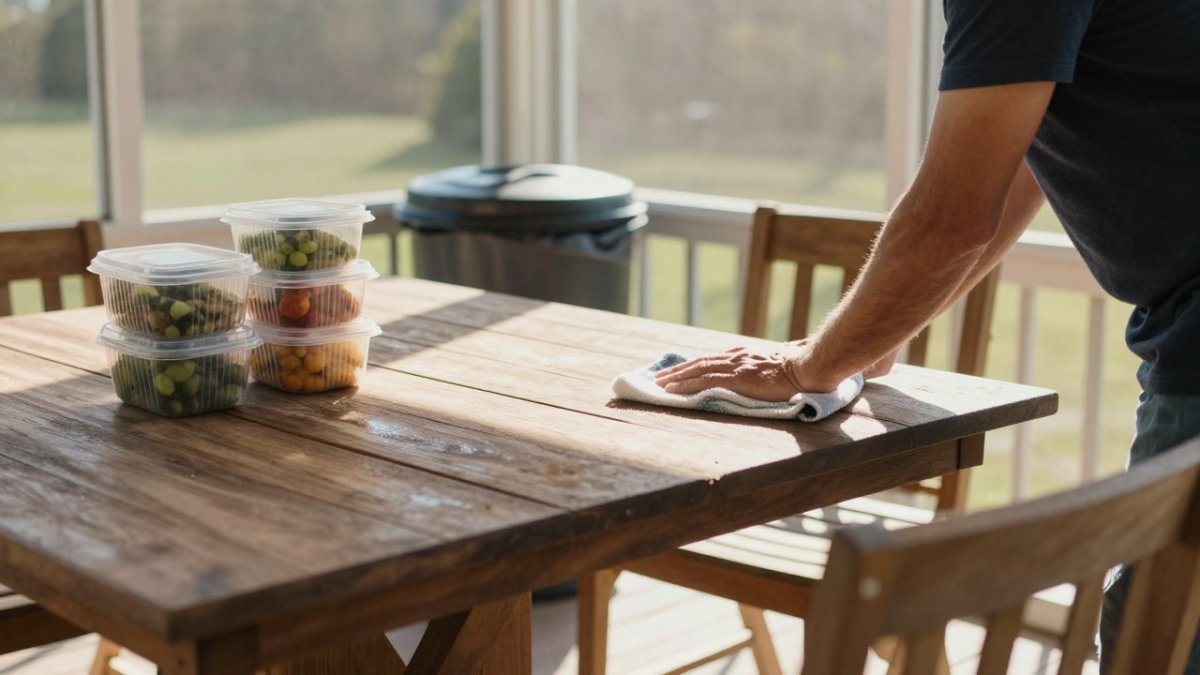
Wipe down tables, chairs, and railings after every meal. Crumbs and dried soda can draw wasps back to the same spot.
- Rinse drink cans before they go in the bin
- Wipe sticky rings on tables the same day
- Sweep fallen food from under the grill
Manage Trash, Fruit Trees, and Sweet Drinks
Trash is the biggest food source on most porches.
Fallen fruit under a tree in the yard pulls wasps close to the house. Pick it up weekly. Keep sweet drinks covered, and use cups with lids when kids are outside.
Watch out: leaving a full trash bag beside the door overnight is the single most common reason wasps keep returning to a porch.
Method 2: How to Keep Wasps Away From Building Nests
The best way to keep wasps away is to deny them a place to build. A queen looking for a nest site wants shelter, a rough surface, and a gap she can reach. Take those away in spring and you prevent the colony entirely. The catch is that different wasps build in different places, so the first step is knowing what you are looking at.
Know the Common Nest Types Before You Inspect
Most porch nests come from a handful of social wasps, and each has a signature location and material. Recognizing the type tells you whether a nest is a small spring starter you can handle or a mature colony that needs a professional.
- Paper wasps build open, umbrella-shaped combs with visible cells, usually hanging from eaves, soffits, railings, or the underside of a porch roof. Colonies are small, and nests are often no larger than a hand.
- Yellowjackets build layered paper envelopes, often in wall voids, crawlspaces, under siding, or in ground cavities near the porch. You may see only a steady stream of traffic to a gap rather than a visible nest.
- Bald-faced hornets build large, gray, football-shaped paper nests in trees, shrubs, and under roof overhangs, sometimes attached to porch structures.
A starter nest in April or May is usually a single queen and a few cells. By August the same site can hold hundreds of workers. That timing is why the inspection schedule below matters more than any single product.
Inspect Eaves, Railings, and Exposed Wood
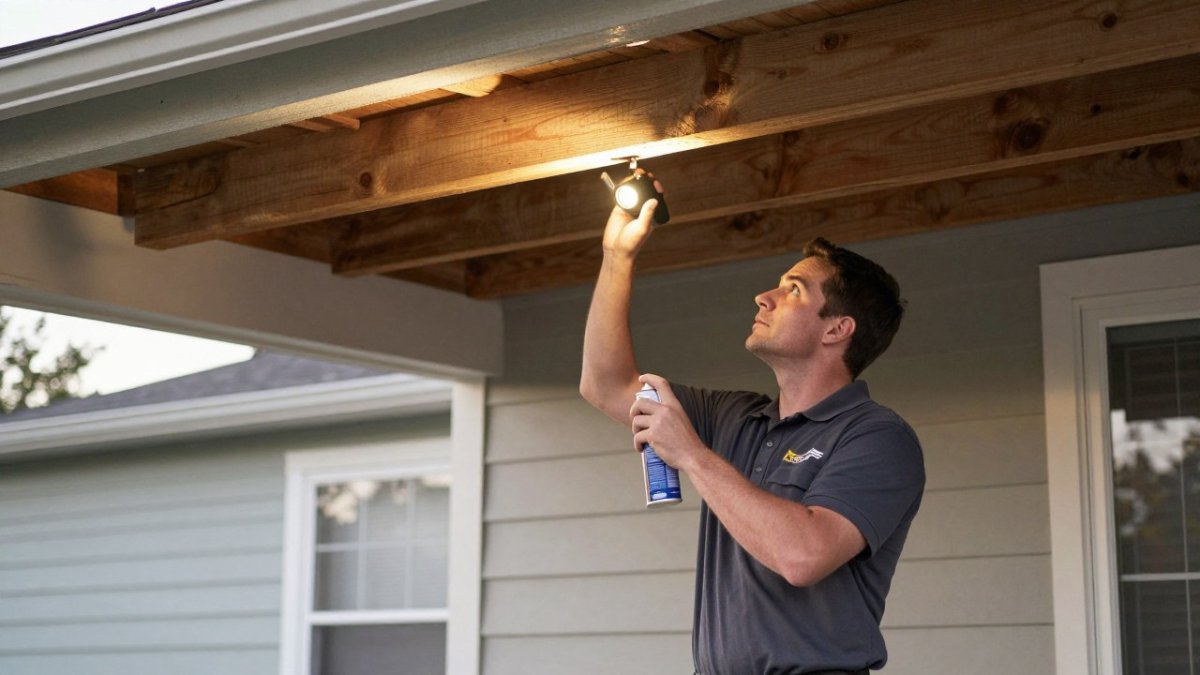
Walk the porch once a week during wasp season. Look up and look under.
- Check eaves and soffits for paper nests
- Look under railings and handrails
- Check exposed wood for signs of chewing
- Inspect light fixtures and outlet covers
Small starter nests are easy to remove early. Large nests are a different job entirely.
Watch out: a visible stream of wasps entering a wall gap usually means the nest is inside the structure, not on the surface, and spraying the outside gap can drive wasps into the home.
Seal Gaps Around Doors and Windows
A gap the width of a pencil is enough for a queen to enter. Seal it before spring.
- Add weatherstripping to doors
- Caulk cracks around window frames
- Screen attic vents and crawlspace openings
- Repair torn screens on doors and windows
That last point sounds obvious. It is also the most common failure we see on porch calls.
Use a Simple Seasonal Timing Plan
Prevention works because queens start new colonies in spring. A porch checked in April is a small job; the same porch in August is a nest removal.
- Early spring: Inspect eaves, soffits, railings, and wall gaps; seal cracks and add weatherstripping before queens establish nests.
- Late spring: Recheck weekly for starter nests and remove small paper-wasp combs early in the day when the colony is small.
- Summer: Keep up weekly inspections, especially under railings and around light fixtures where traffic is heaviest.
- Late summer: Expect peak worker activity; do not attempt large nests yourself.
If you find a nest above head height or inside a wall, stop and treat it as a professional job. The next section covers why.
Method 3: What Can I Put on My Porch to Keep Wasps Away?
Plants and oils can make a porch less inviting. They cannot remove a nest. That distinction matters, because most guides blur it. As the Farmer's Almanac guide to natural wasp control notes, peppermint may help deter wasps but will not remove an established nest.
Wasp-Repelling Plants and Essential Oils
Strong scents may interrupt a wasp's search for food. Results vary, and no plant clears an active nest. A wasp already following a food or nest cue is not reliably turned away by smell alone.
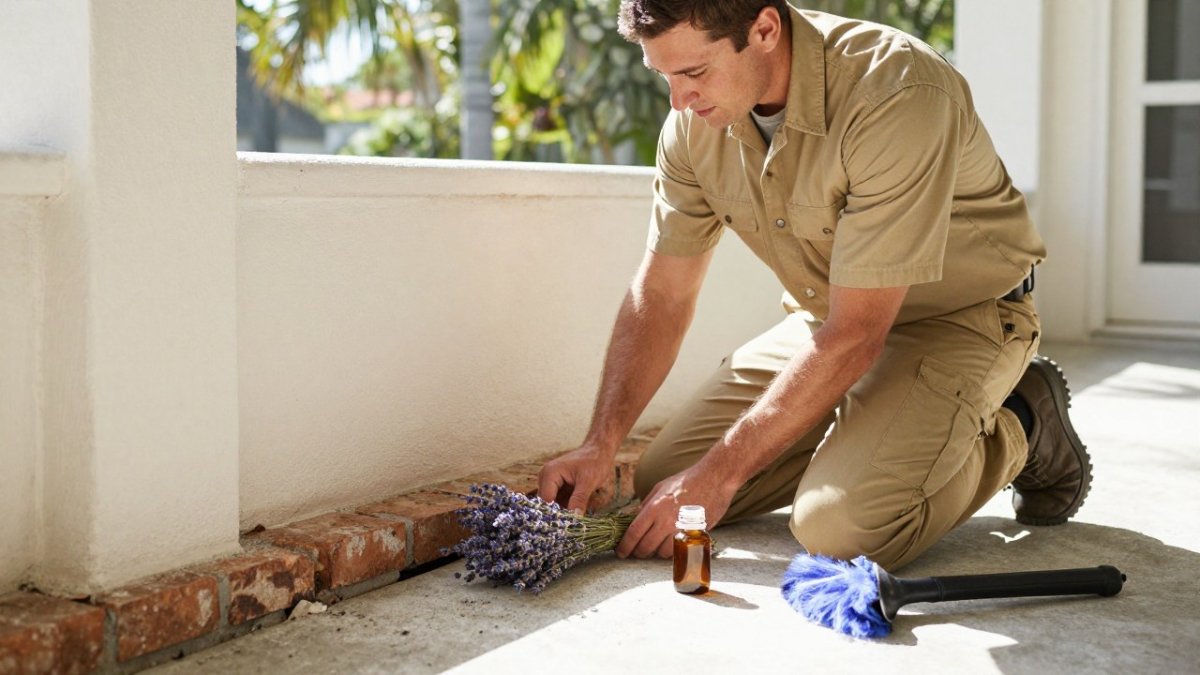
- Plant mint, basil, and marigolds near seating
- Try citronella, geraniums, and pennyroyal in pots
- Dilute peppermint oil and wipe down railings
- Refresh oil treatments weekly, since scent fades
Treat these as a mild layer, not a solution. Scent-based deterrents work temporarily at best.
Traps, Decoys, and Their Limits
Traps catch wasps. They do not stop a colony from growing under your roof. A common pattern is that a trap near a picnic table catches some workers but also pulls more wasps toward the seating area, which is why placement matters as much as the trap itself.
- Hang traps away from seating areas
- Empty traps often, before they fill
- Use decoy nests early in spring only
- Skip traps near food, since they draw wasps in
If you see steady traffic to one spot, look for the nest.
Pet, Child, and Pollinator Considerations
Natural does not automatically mean risk-free. Essential oils can be irritating to pets and children if applied heavily to surfaces they touch, and some oils are toxic to cats when ingested or licked from fur.
Pollinators are a separate concern. Wasps are predators and pollinators, and many are beneficial. Broad traps and sprays can catch honeybees and native bees along with wasps.
How to Judge Whether a Deterrent Is Working
A simple test keeps you from wasting money. Mark the date you apply a product, then watch the same porch spot for a week. If wasp traffic to a single point continues, the product is not addressing the cause and you should look for a nest instead of reapplying. If traffic drops but returns within days, the effect was temporary, which is typical of scent-based options.
How to Keep Wasps Away Naturally: Evidence and Limitations
Natural methods work best as prevention, not rescue. That is the honest answer to how to keep wasps away naturally. Plants, oils, and traps reduce pressure around a porch, but none of them addresses a nest that already exists.
Here is how we would rank them:
| Natural Method | Best For | Real Limit |
|---|---|---|
| Plant scents | Mild deterrence near seating | No effect on a nest |
| Essential oils | Short-term barrier on surfaces | Fades within days |
| Traps | Reducing patrol wasps | Can attract more wasps |
| Decoy nests | Early spring only | Ignored once a colony forms |
| Manual nest removal | Small starter nests | Risky for large nests |
For deeper guidance on non-toxic methods around a home, see our guide on natural pest prevention for Florida homes.
Safety First: Handling Nests, Stings, and Persistent Wasps
Never spray a large nest during the day. Wasps are most active then, and a disturbed colony defends the nest aggressively. Wait for dusk or early morning, when most wasps are inside and sluggish.
- Wear long sleeves, pants, and eye protection
- Keep children and pets indoors during removal
- Never stand on a ladder directly under a nest
- Seal the trash bag and remove it immediately
If someone is stung and shows trouble breathing, swelling of the face, or dizziness, get emergency help right away. For nest questions and next steps, our FAQs page covers the common concerns.
Your Seasonal Prevention Schedule for a Wasp-Free Porch
Timing decides how much work you do. A porch checked in April is a small job. The same porch in August is a nest removal.
- Early spring: Inspect eaves, seal gaps, hang no traps yet
- Late spring: Watch for starter nests, plant scented herbs
- Summer: Clean tables daily, keep trash sealed, check weekly
- Late summer: Peak scavenger season, cover all food and drinks
Pair this with broader habits from our list of pest control habits that keep pests away for good.
When to Call NS Pest Solutions for Porch Wasp Control
Call a professional when you find a nest above head height, when wasps return within days of removal, or when anyone in the home has a sting allergy.
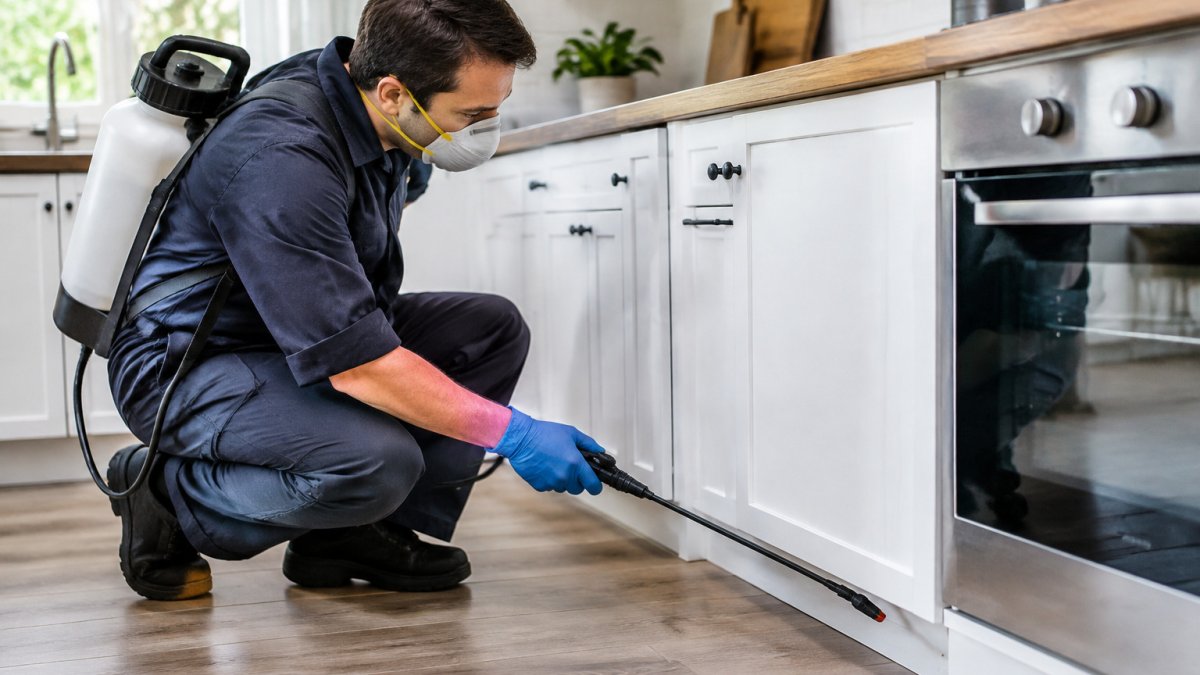
Our team handles wasp and pest control with targeted interior and exterior treatments. You can review our services or contact us to request a quote.
Wasps will keep testing your porch every season, and one missed nest can undo weeks of cleaning.
Frequently Asked Questions
What can I put on my porch to keep wasps away?
Start with physical barriers and scent deterrents: seal gaps around doors and windows, set out wasp traps away from seating areas, and place potted marigolds, mint, or citronella plants near railings. Peppermint-soaked cotton balls can also help. These methods may discourage wasps, but they will not remove an established nest. For active nests, call a professional.
Do natural wasp repellents really work?
Natural repellents like peppermint oil, citronella, and certain plants may help deter wasps from an area, but research shows they do not eliminate existing nests. Use them as part of a broader prevention plan that includes removing food sources, sealing entry points, and inspecting for nests. If wasps keep returning, a professional assessment is the most reliable next step.
How do I keep wasps from building a nest on my porch?
Inspect eaves, railings, and exposed wood regularly during wasp season. Seal cracks and gaps around doors and windows, and remove old nests or nesting debris. Keeping the porch clean and free of food residue also makes it less attractive. For ongoing protection, schedule routine inspections with a pest control provider, especially in spring when queens start looking for nesting sites.
What should I do if I find a wasp nest on my porch?
Do not attempt to remove a large nest yourself, especially if you are allergic or the nest is near a high-traffic area. Keep people and pets away, and contact a professional pest control service. NS Pest Solutions offers eco-friendly pest management services. For details, please visit our website.