 blog
Alternatives to One-Time Commercial Pest Control Treatment
Last Updated: October 25, 2026
Quick Summary
Commercial pest control alternatives to one-time treatments include recurring service plans with scheduled visits, Integrated Pest Management combining inspection and prevention, monitoring-led programs using traps and sensors, and exclusion work that seals entry points. Each approach addresses the root causes that one-time treatments miss, reducing reinfestation cycles and long-term costs.
- Recurring commercial pest control plans vary by visit frequency, device servicing, exclusion work, and callback terms, making total annual cost more important than quoted monthly rates.
- Integrated Pest Management uses exclusion, sanitation, and targeted treatment only when monitoring detects problems, reducing pesticide use and improving long-term results.
- Restaurants and food service require ongoing monitoring because the environment recreates pest-attracting conditions within days of a one-time treatment.
- One-time service works best for isolated, low-risk problems; recurring plans suit sites with continuous risk factors like food, moisture, or multiple entry points.
- Monitoring systems with regular inspection schedules create documentation that satisfies health inspectors and demonstrates a systematic approach to pest management.
Table of Contents
- Why One-Time Commercial Pest Control Falls Short
- Recurring Service Plans for Ongoing Commercial Pest Control
- Integrated Pest Management for Businesses
- Restaurant Pest Prevention and Monitoring
- Commercial Pest Monitoring Systems and Inspection Schedules
- Non-Chemical and Low-Impact Treatment Options
- Building Your Commercial Pest Management Strategy
- Frequently Asked Questions
Why One-Time Commercial Pest Control Falls Short
A single treatment addresses immediate problems but leaves your business vulnerable to reinfestation.
One-time treatments don't account for pest lifecycles or the environmental conditions that support infestations.
According to the Integrated Pest Management Toolkit from the New York City Department of Health and Mental Hygiene, prevention-based approaches provide long-lasting pest control and improve building conditions compared to reactive treatments alone.
Businesses often cycle through multiple one-time treatments in a single season, each costing money and disrupting operations.
Recurring Service Plans for Ongoing Commercial Pest Control
Recurring commercial pest control is a family of service structures differing in visit frequency, scope, documentation, and follow-up. Comparing them on the monthly invoice alone is the most common buying mistake, because the cheapest plan often carries the highest follow-up cost.
The main recurring structures commercial sites choose from:
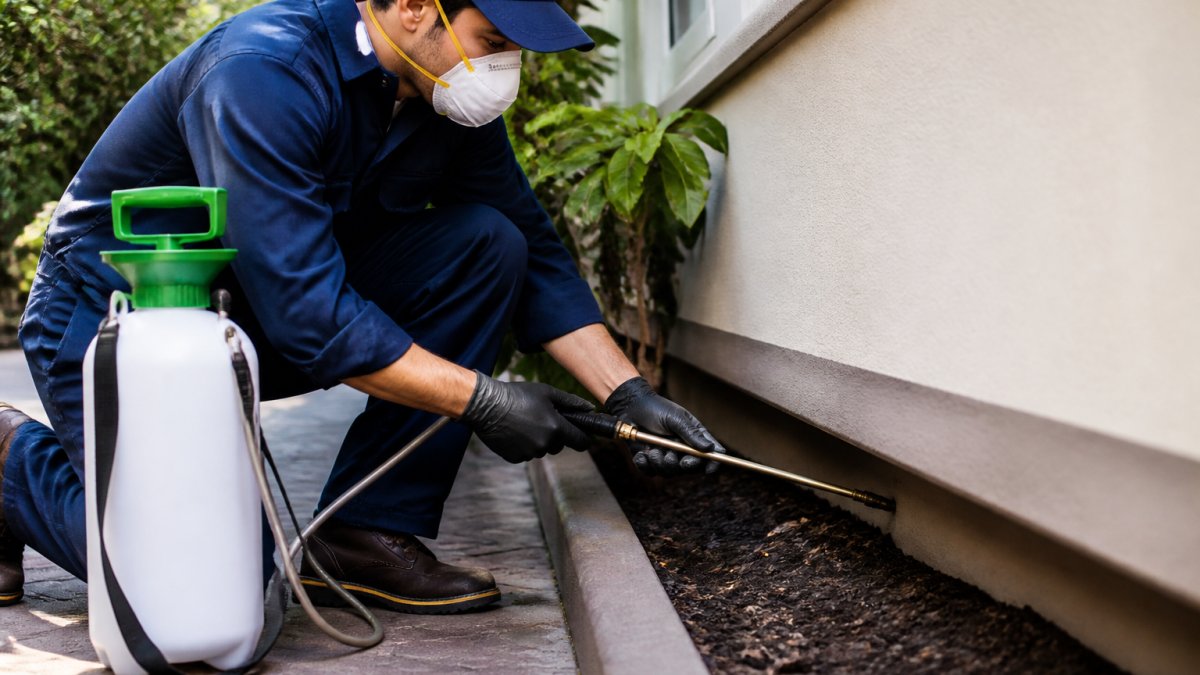
- Scheduled preventive service. A fixed number of visits per year (commonly monthly, every-other-month, or quarterly) with inspection, exterior perimeter treatment, and interior monitoring. Best for offices, retail, and low-to-moderate-risk sites.
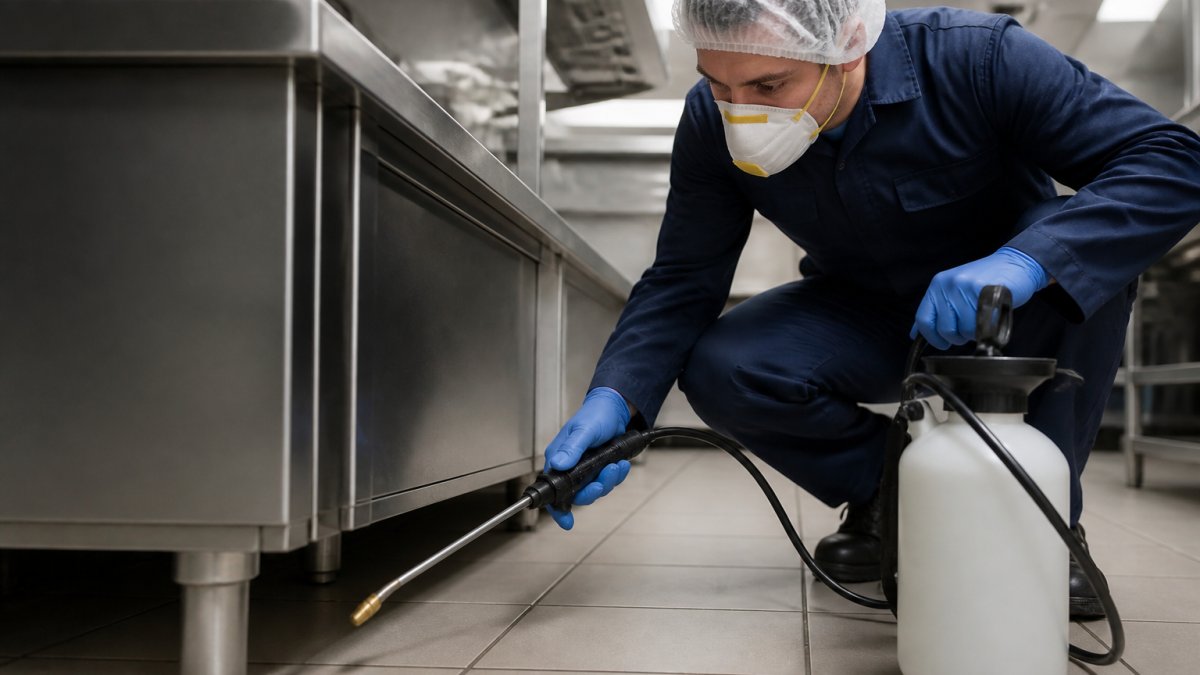
- Monitoring-led service. Devices and inspection logs drive treatment decisions; chemical use is targeted rather than calendar-driven. Common in food service, food storage, and multi-unit properties where documentation matters.
- On-call plus baseline. A minimal scheduled presence with a defined response window for callbacks. Attractive for warehouses and light-industrial sites with low pest pressure but a need for fast response.
What actually drives the price
Recurring quotes vary because providers price different cost drivers. Ask which of these are included before comparing numbers:
- Visit frequency and time on site. A 20-minute perimeter check and a 90-minute interior inspection with device servicing are not the same service even at the same visit count.
- Device count and servicing. Rodent stations, insect monitors, and fly units carry per-device labor and replacement costs.
- Exclusion and repair work. Sealing utility penetrations, installing door sweeps, and repairing screens are often quoted separately; some contracts bundle a repair allowance.
A low base fee is often offset by per-callback charges, device replacement fees, or exclusion work billed at time and materials. Compare total annual cost including one or two realistic callbacks, not the quoted monthly rate.
Contract terms worth reading closely
- Term and cancellation. Month-to-month, annual, and multi-year terms are all common; notice periods and early-termination fees vary.
- Scope exclusions. Many plans exclude certain pests (for example, wildlife, bed bugs, or stored-product moths) or certain areas (interior of tenant spaces in multi-unit buildings).
- Guarantee language. A service guarantee typically defines what triggers a free callback, how quickly it must be requested, and whether it covers treatment only or also repair and remediation.
Recurring plans aren't automatically better than a one-time visit. They win when the site has recurring risk factors, food, moisture, multiple entry points, shared walls, or high turnover of staff and deliveries. For a single isolated problem in a low-risk suite, a one-time treatment with a defined callback window can be more economical. The decision framework later walks through that comparison by pest and severity.
Integrated Pest Management for Businesses
Integrated Pest Management (IPM) combines inspection, monitoring, prevention, and targeted treatment to reduce reliance on pesticides alone.
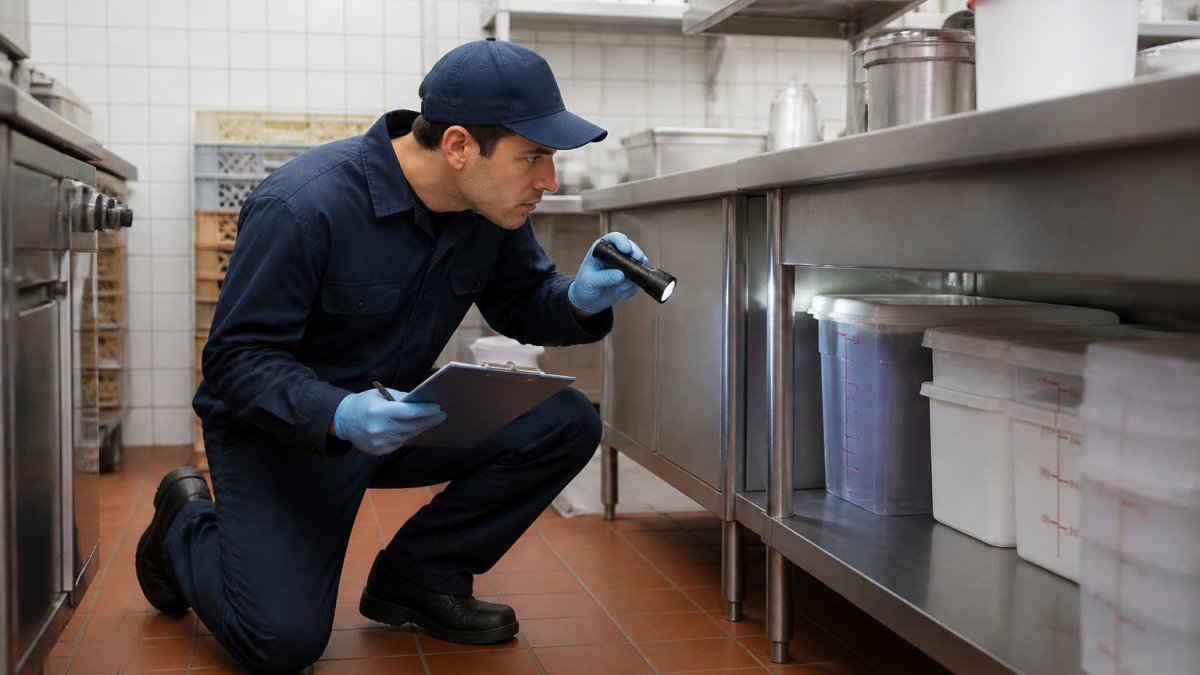
IPM rests on three principles: exclusion (sealing entry points), sanitation (removing food and water sources), and targeted treatment only when monitoring detects a problem. This layered approach means fewer chemicals, lower costs over time, and better long-term results.
The Integrated Pest Management Toolkit describes IPM as prevention-based, improving building conditions while using less pesticide than conventional methods.
IPM addresses root causes, not just symptoms. A restaurant with ants needs sealed gaps, improved storage, and regular monitoring to catch new colonies before they establish.
Restaurant Pest Prevention and Monitoring
Restaurants combine food, moisture, and shelter in ways that attract insects and rodents, so prevention requires constant vigilance and systematic processes far beyond a single treatment.
Effective restaurant pest prevention includes:
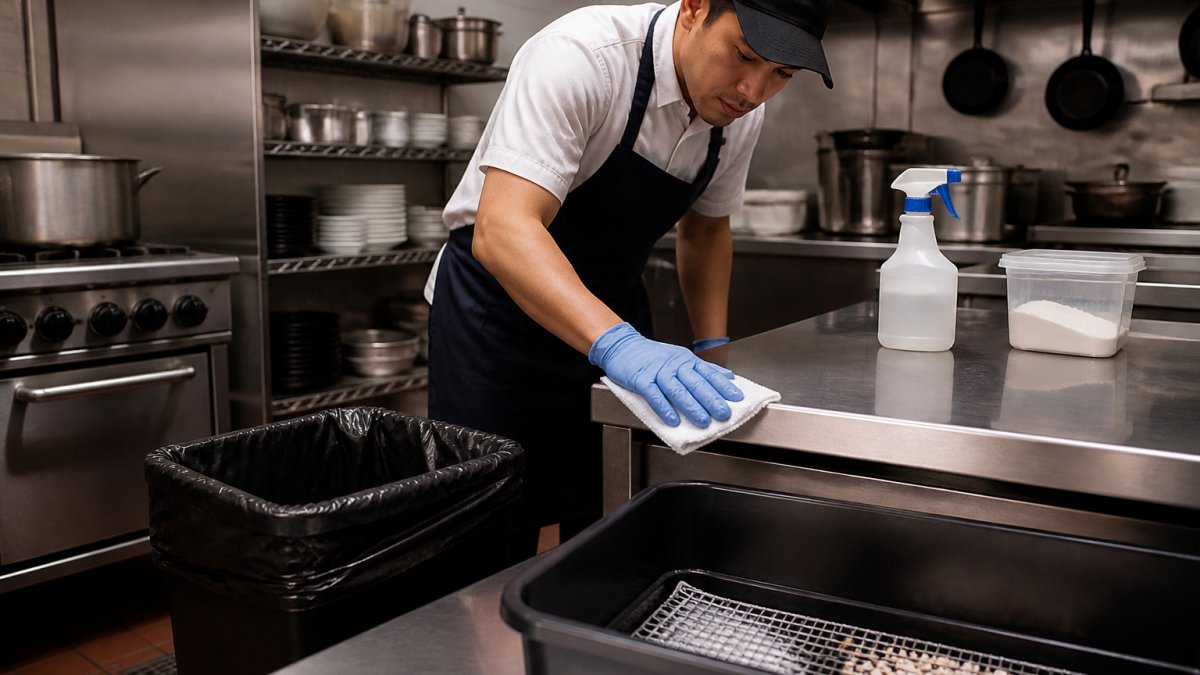
- Daily sanitation protocols that eliminate food debris and grease
- Sealed storage for dry goods and regular inspection for signs of infestation
- Regular inspection of entry points, including doors, windows, and utility penetrations
Learn about 5 Ways to Prevent Pests in a Restaurant for detailed strategies tailored to food service operations.
A one-time treatment in a restaurant is particularly ineffective because the environment recreates pest-attracting conditions within days.
The difference between restaurants that stay pest-free and those with recurring problems almost always comes down to recurring service.
Commercial Pest Monitoring Systems and Inspection Schedules
Modern commercial pest control relies on monitoring systems, traps, sensors, and regular inspections, that detect activity before infestations develop and drive data-based treatment decisions.
Effective monitoring includes:
- Placement of monitoring devices in high-risk areas (entry points, storage, food prep zones)
- Regular inspection schedules (weekly, bi-weekly, or monthly depending on risk level)
- Documentation of findings to track trends and identify patterns
Inspection frequency depends on business type, pest pressure, and regulations: a food processing facility might need weekly monitoring, an office building monthly visits.
Inspection schedules create accountability and the documentation regulators expect. When health inspectors ask what measures you have in place, service records and monitoring logs demonstrate a systematic approach.
Non-Chemical and Low-Impact Treatment Options
Not all commercial pest control requires heavy chemical sprays. Non-chemical and low-impact methods work well in many situations and meet growing demand for safer, more sustainable approaches.
Effective non-chemical options include:
- Mechanical removal and exclusion (sealing cracks, installing door sweeps, screening vents)
- Boric acid and diatomaceous earth for targeted indoor use
- Botanical insecticides derived from plant sources
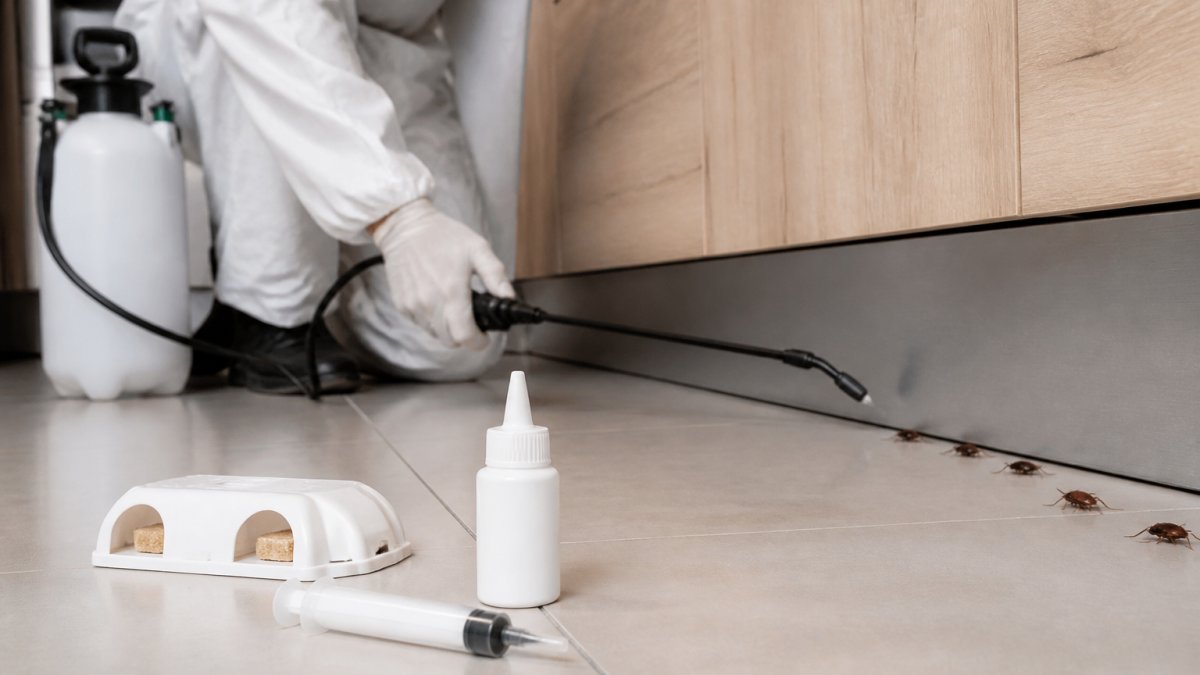
Research comparing cockroach control approaches found that vacuums and baits were much more effective than traditional baseboard and crack-and-crevice applications, according to the National Center for Healthy Housing's Comparison of Cost and Effectiveness for Cockroach Control.
Low-impact treatments reduce exposure risk, support safety compliance, and often cost less than heavy chemical programs. They work best within a recurring service plan where monitoring informs treatment choices.
Building Your Commercial Pest Management Strategy
Most commercial pest decisions fail not because the wrong service was bought but because there was no framework. The useful question isn't "one-time or recurring?" but "what does this pest, at this severity, in this facility require?"
A decision framework by pest and severity
Use the matrix below as a starting point, then adjust for your facility type and regulatory exposure.
- Ants and occasional invaders (minor, isolated). A one-time targeted treatment plus exclusion (sealing entry points, correcting moisture) is often sufficient. Escalate to monitoring if sightings recur within 30 to 60 days or if multiple units report activity.
- Cockroaches (any severity in food service). A single visit is rarely adequate. German cockroaches reproduce quickly and hide in equipment and wall voids; baiting and monitoring over multiple visits is the standard approach. In restaurants and food storage, treat any confirmed cockroach activity as a monitoring-led program, not a one-time event.
- Rodents (droppings, gnaw marks, or a single sighting). One-time trapping removes current animals but does not address entry points or the population outside. A typical pattern is a short intensive trapping phase followed by exterior station servicing and exclusion work. In warehouses and multi-unit properties, exterior pressure usually justifies ongoing monitoring.
Comparing the alternatives on total cost, not sticker price
The four realistic alternatives for a commercial site are one-time service, a recurring contract, in-house prevention, and targeted repairs and exclusion. They differ less in upfront price than in follow-up exposure.
- One-time service. Lowest upfront cost. Follow-up exposure is high if the underlying condition is not corrected; a second and third visit within the same season is common. Best for isolated, low-risk problems with a clear cause.
- Recurring contract. Higher predictable cost, lower surprise cost. The value depends on callback terms and whether exclusion work is included. Best for sites with continuous risk factors.
- In-house prevention. Staff time for sanitation, storage, and self-inspection, plus training and supplies. Cost is mostly labor and management attention. Works well as a complement to professional service, rarely as a full substitute in food-handling or regulated environments.
Documentation and compliance considerations
For regulated commercial sites, the pest decision is also a documentation decision. Inspectors, auditors, and property managers ask for service records, pesticide-use records, monitoring logs, and evidence of corrective actions. A one-time treatment produces a single ticket; a monitoring-led program produces a trend record. If you face food-safety audits or landlord reporting, weigh documentation output as heavily as treatment method.
A practical sequence
- Identify the pest and estimate severity (isolated sighting versus established population).
- Inspect for the conditions driving it: entry points, moisture, food and waste handling, and storage practices.
- Correct what can be corrected through exclusion and sanitation before or alongside treatment.
- Choose the service structure that matches the risk: one-time with a callback window for isolated low-risk problems; monitoring-led or recurring for continuous-risk sites.
- Define what documentation you need and confirm the provider will supply it.
- Review results at 60 to 90 days and adjust frequency up or down based on monitoring data rather than habit.
View Services to learn more about our service structures, or Contact Us to walk through the framework with your specific pest and severity profile.
| Service Type | Best For | Frequency | Key Benefit |
|---|---|---|---|
| One-time treatment | Isolated, minor problems with a clear cause | As needed, with a defined callback window | Low upfront cost |
| Recurring service | Ongoing commercial protection | Monthly, bi-monthly, or quarterly | Predictable cost and prevention |
| IPM program | Sustainable, long-term control | Ongoing with monitoring | Fewer chemicals, better documentation |
| Monitoring-only | Tracking pest activity and audit readiness | Weekly to monthly | Early detection and trend records |
| Exclusion and repairs | Removing conditions that support pests | Project-based | Highest return per dollar |
Frequently Asked Questions
Is ongoing pest control better than a one-time treatment for a business?
Yes. One-time commercial pest control treatments address immediate infestations but leave no planned follow-up, making pests likely to return. Recurring service provides continuous monitoring, preventive treatment, and rapid response to new activity. The New York City Department of Health and Mental Hygiene notes that integrated pest management, a prevention-based approach, delivers long-lasting control and improves building conditions. For commercial operations, recurring plans protect your reputation, ensure compliance, and reduce the cost of major infestations.
What should a commercial pest prevention plan include?
A comprehensive plan combines regular inspections, sanitation protocols, exclusion (sealing entry points), targeted treatment, and monitoring schedules. Integrated pest management for businesses emphasizes prevention before pesticide use. Include baseline inspections, documentation of findings, scheduled repeat visits, staff training on sanitation, and clear communication with your service provider about your facility's unique risks, such as food storage areas in restaurants or sensitive zones in healthcare settings.
How often should a restaurant schedule pest control?
Restaurant pest prevention requires regular visits, with frequency depending on facility size, kitchen design, and local pest pressure. High-risk areas like loading docks, storage rooms, and kitchen perimeters need frequent monitoring. Commercial pest monitoring with detailed inspection reports helps catch infestations early. Your pest control provider should assess your specific operation and recommend a schedule that balances protection with cost.
What non-chemical methods can businesses use to prevent pests?
Non-chemical pest control methods include exclusion (sealing cracks, gaps, and entry points), sanitation (removing food debris and clutter), proper waste management, and regular inspections. Diatomaceous earth and boric acid are low-toxicity options for targeted use. Installing door sweeps, screens, and ventilation guards reduces pest entry. For restaurants and food-handling businesses, these methods are often required by health codes. Combining non-chemical prevention with occasional targeted chemical treatment (when needed) is the foundation of integrated pest management for businesses and minimizes pesticide exposure.
Recurring commercial pest control protects your business, maintains compliance, and costs less than managing repeated infestations. NS Pest Solutions delivers eco-friendly, every-other-month service plans designed for commercial establishments. Contact us today to schedule a consultation and discover how ongoing protection prevents costly pest problems.